Deployment 2016 to 2018:
FLNTU
Chlorophyll and Turbidity
FLNTU
Chlorophyll and Turbidity
|
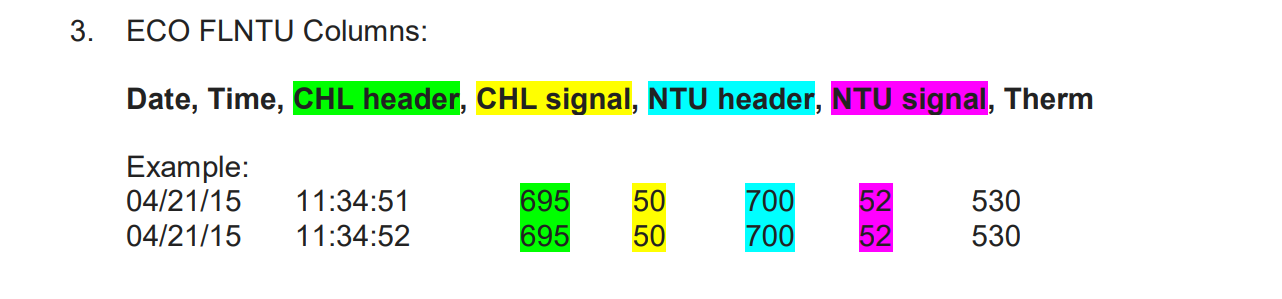
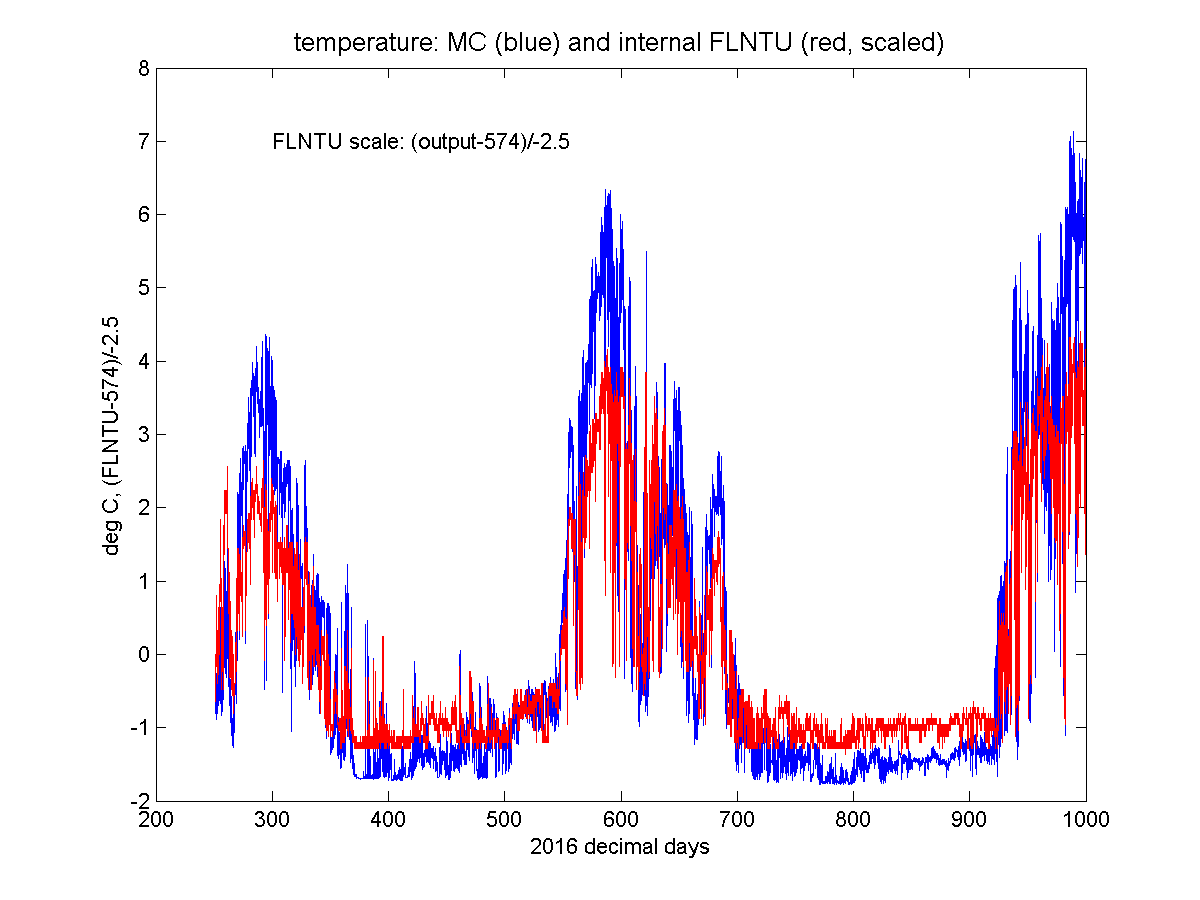
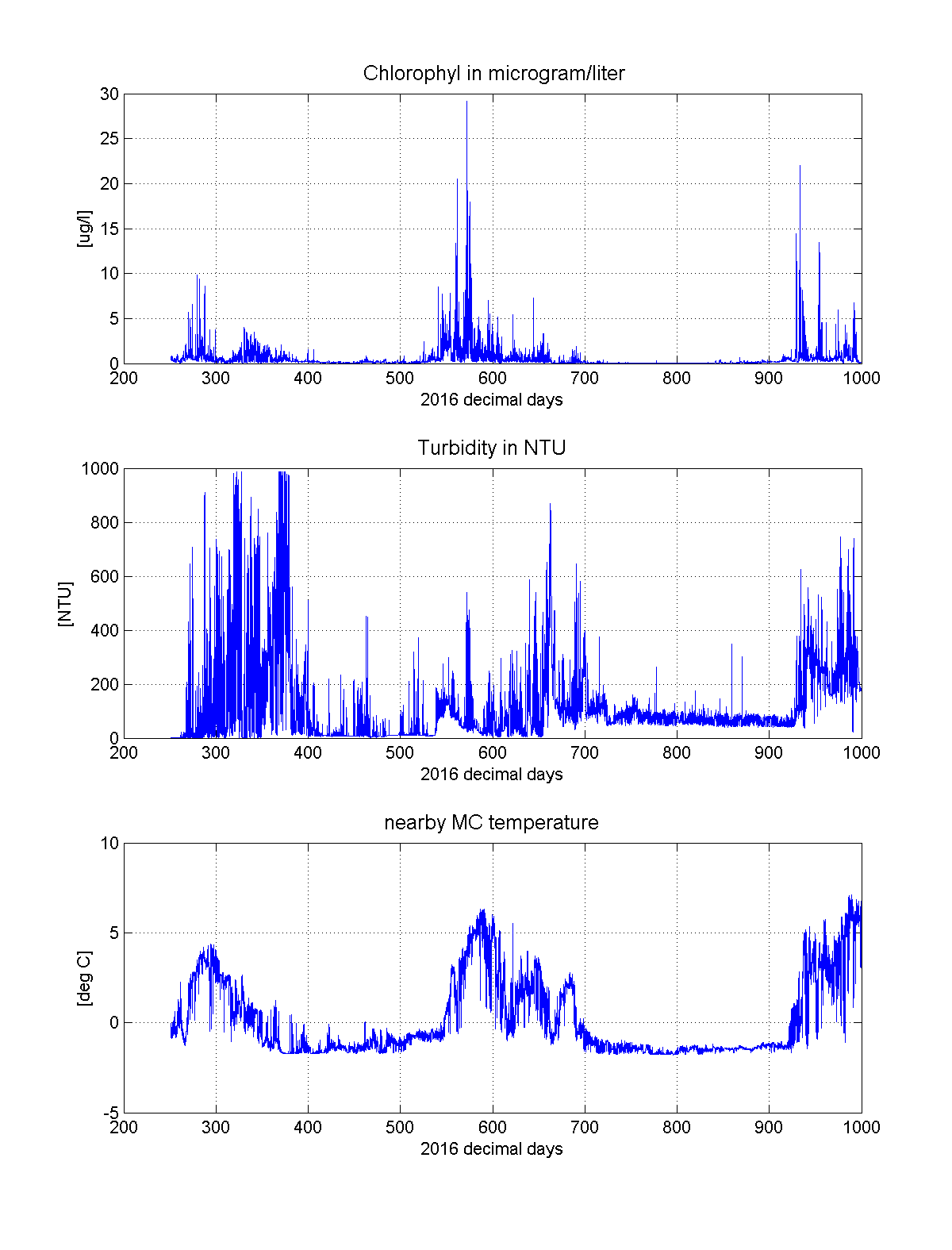
Deployment summary: Duration: Sept 8, 2016 to Sept 26, 2018 Location: 71° 23.661' N, 152° 3.04' W at approx. 38 meters depth (water depth was 147m) Variables measured: chlorophyll fluorescence, nephelometric turbidity Sensor information: FLNTU serial no. 4398; for details see the manual; Instrument settings: sampling interval 1 hour Calibration: based on factory calibration data: contained in the matlab file fl4398_201618_eu.mat. Its format is described in the variable "readme" contained in the file, as well as here. |
|
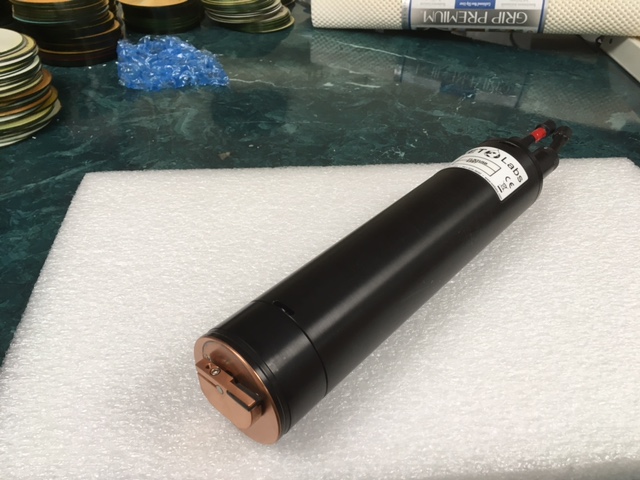
Instrument setup and deployment: This instrument was newly purchased for the 2016-18 deployment. We included an optional bio-wiper that, together with the copper cladding around the sensing window, was intended to reduce bio-fouling. It was programmed to take five 1-second samples every hour, and was mounted in an instrument cage together with a SUNA nitrate sensor and its battery. |
 |
 |
 |
| FLNTU with copper endcap and bio-wiper | wiper opened during sampling | 2016-18 BS3 instrument cage with FLNTU |
|
|